
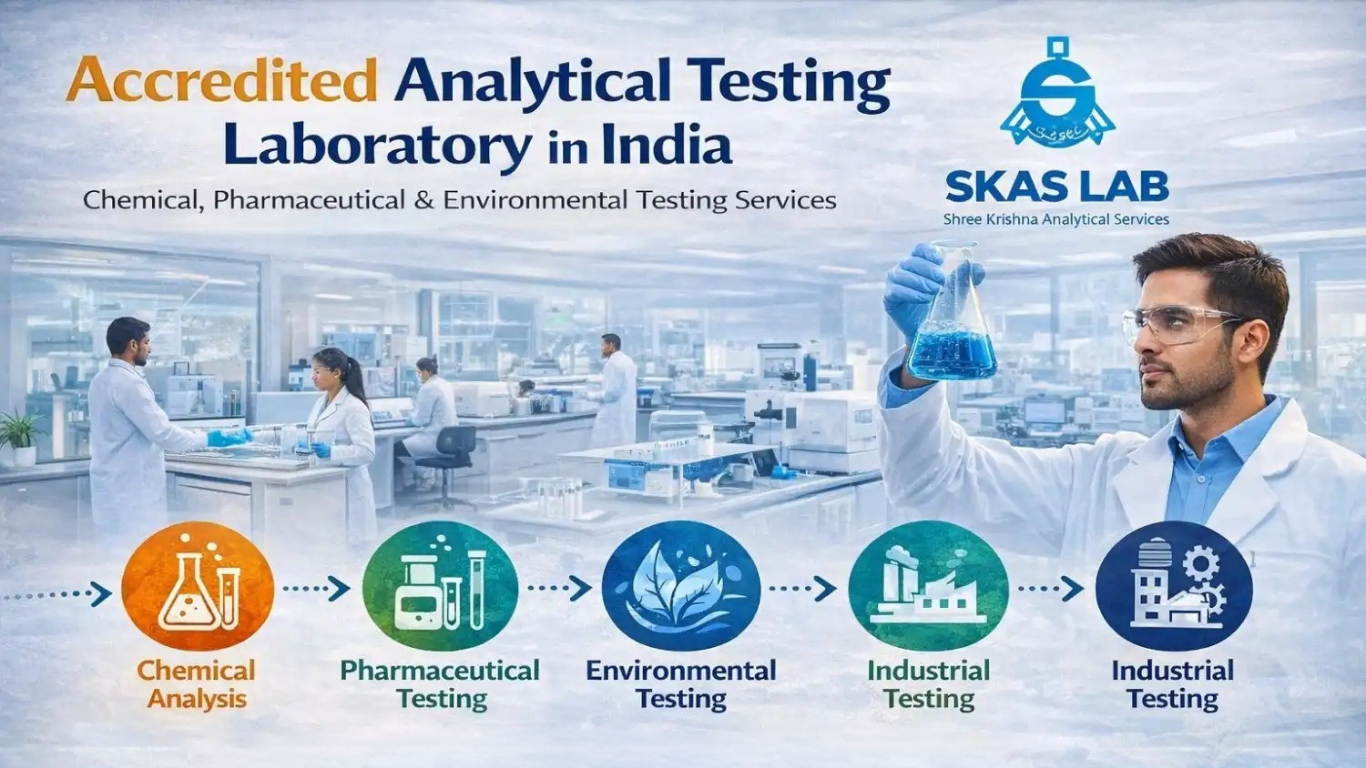
Sample Collection and Analysis in an Analytical Testing Laboratory in India
The journey from sample collection to final analysis forms the backbone of reliable testing results in any analytical testing laboratory in India. With increasing regulatory demands and quality standards across industries, proper sample handling has become more critical than ever. This comprehensive guide explores the meticulous processes involved in sample collection, preparation, and analysis that ensure accurate, reliable results for businesses across various sectors.
The Journey from Sample Collection to Final Analysis
The journey from sample collection to final analysis forms the backbone of reliable testing results in any analytical testing laboratory in India. With increasing regulatory demands and quality standards across industries, proper sample handling has become more critical than ever.
This comprehensive guide explores the meticulous processes involved in sample collection, preparation, and analysis that ensure accurate, reliable results for businesses across various sectors.
The Critical Importance of Proper Sample Collection
Sample collection represents the first and perhaps most crucial step in the analytical testing process. Even the most advanced laboratory equipment and skilled analysts cannot compensate for improperly collected samples. In India's diverse industrial landscape, from pharmaceuticals to food processing, the integrity of testing begins at this initial stage.
Professional sample collection services in India follow strict protocols that ensure samples truly represent the material being tested. This includes using appropriate sampling tools, containers, and preservation techniques specific to each sample type.
Whether collecting water from industrial effluents, food products from production lines, or raw materials from manufacturing facilities, each requires specialized knowledge and equipment.
The timing of sample collection also plays a critical role in result accuracy. For instance, environmental samples may need collection at specific times to account for operational variations, while food samples might require collection from different production batches to ensure comprehensive quality assessment.
Did You Know? Improper sample collection accounts for approximately 40–60% of testing errors. This highlights why reputable laboratories either provide their own collection services or offer detailed guidance on proper sampling techniques.
Sample Documentation and Chain of Custody
Proper documentation forms the foundation of reliable analytical testing. Each sample must be accompanied by comprehensive information that follows it throughout the testing process.
Essential documentation includes:
- Unique sample identification numbers
- Date and time of collection
- Specific location details
- Physical characteristics of the sample
- Preservation methods applied
- Required testing parameters
- Names and signatures of all handlers
The chain of custody documentation ensures sample integrity by tracking every person who handles the sample from collection to final disposal. This unbroken documentation chain is particularly important for regulatory compliance and legal purposes.
Need Help With Proper Sample Documentation?
Our experts can guide you through the proper documentation process to ensure your samples meet all regulatory requirements.
Request Documentation Guidelines
Sample Transportation and Storage
The journey between the collection site and laboratory presents numerous challenges that can compromise sample integrity. Temperature fluctuations, exposure to light, physical damage, and time delays can all affect sample composition.
To avoid these risks, accredited laboratories follow strict protocols for controlled transport, using temperature-regulated containers, shock-resistant packaging, and real-time tracking systems.
Similar to processes followed in medical device testing, proper handling and documentation during transportation are critical to maintaining sample reliability and ensuring accurate analytical results.
Professional laboratories implement strict transportation protocols that include:
- Temperature-controlled containers for heat-sensitive samples
- Light-proof packaging for photosensitive materials
- Shock-absorbing materials for fragile samples
- Preservation agents to maintain sample stability
- Expedited delivery services for time-sensitive testing
Upon arrival at the laboratory, samples undergo immediate inspection to verify their condition and documentation. They are then assigned to appropriate storage conditions based on their nature and the planned testing schedule.
Some samples require immediate processing, while others may need specialized storage in freezers, refrigerators, or controlled-humidity environments.
The Art and Science of Sample Preparation
Sample preparation in an analytical testing lab represents the bridge between raw samples and precise analysis. This critical phase transforms collected materials into forms suitable for testing instruments and methodologies.
Homogenization
- Creating uniform consistency throughout the sample to ensure representative testing.
Extraction
Isolating target compounds from complex matrices using appropriate solvents.
Filtration
Removing particulates and impurities that could interfere with analysis.
Different sample types require specialized preparation techniques. For instance, solid samples might need grinding, sieving, or digestion, while liquid samples could require dilution, pH adjustment, or derivatization.
The preparation method directly impacts the quality of results, making this step as important as the analysis itself.
“The quality of analytical results is only as good as the sample preparation that precedes it. Even the most sophisticated instruments cannot compensate for poorly prepared samples.”
– Dr. Rajesh Kumar, Senior Analytical Chemist
Advanced Analytical Methods and Instrumentation
Modern trusted quality lab testing India facilities employ a wide range of sophisticated analytical techniques to deliver precise, reliable results across various parameters.
| Analytical Technique | Applications | Detection Capabilities |
|---|---|---|
| High-Performance Liquid Chromatography (HPLC) | Pharmaceuticals, food additives, pesticides | Parts per million (ppm) to parts per billion (ppb) |
| Gas Chromatography-Mass Spectrometry (GC-MS) | Volatile compounds, pesticides, environmental pollutants | Parts per billion (ppb) to parts per trillion (ppt) |
| Inductively Coupled Plasma (ICP) | Heavy metals, minerals, elemental analysis | Parts per billion (ppb) |
| Fourier Transform Infrared Spectroscopy (FTIR) | Material identification, structural analysis | Functional group identification |
| Atomic Absorption Spectroscopy (AAS) | Metal analysis in food, water, soil | Parts per million (ppm) |
The selection of analytical methods depends on the nature of the sample, parameters being tested, required detection limits, and regulatory standards.
Leading laboratories maintain a diverse instrument portfolio to address varied testing needs across industries.
Quality Control and Assurance Measures
Reliable laboratory sample analysis in India depends on robust quality control measures that verify the accuracy and reliability of results.
Internal Quality Controls
- Method blanks to detect contamination
- Duplicate samples to verify precision
- Spiked samples to confirm accuracy
- Certified reference materials for calibration
- Instrument performance verification
- Statistical process control charts
External Quality Assurance
- Participation in proficiency testing programs
- Inter-laboratory comparison studies
- Third-party audits and assessments
- Compliance with international standards
- Regular method validation exercises
Leading accredited testing labs in India maintain comprehensive quality management systems compliant with ISO/IEC 17025 standards.
Ensure Your Testing Meets Quality Standards
Our accredited laboratory follows rigorous quality control protocols to deliver reliable, defensible results.
Industry-Specific Testing Approaches
Different industries have unique testing requirements based on their products, processes, and regulatory frameworks.
Pharmaceutical Testing
Focuses on drug potency, purity, stability, dissolution, and bioavailability, following pharmacopeia standards and GMP requirements.
Food Testing
Food sample testing India covers nutritional analysis, contaminants, additives, allergens, and microbial safety, adhering to FSSAI standards.
Environmental Testing
Examines water, soil, and air for pollutants, heavy metals, and organic compounds to assess environmental impact and regulatory compliance.
Industrial sample testing services also extend to textiles, polymers, petrochemicals, construction materials, and more.
Data Analysis and Interpretation
- Data Processing: Converting instrument signals into quantitative results.
- Statistical Analysis: Assessing data reliability and significance.
- Regulatory Evaluation: Comparing results with standards and limits.
- Trend Analysis: Identifying long-term patterns.
- Expert Interpretation: Translating data into actionable insights.
Technology Integration in Modern Laboratories
Laboratory Information Management Systems (LIMS)
Digital platforms that track samples, manage workflows, and generate reports.
Automation Systems
Robotic sample handling and automated instruments that reduce human error and increase throughput.
Digital Reporting Platforms
Secure portals providing real-time access to testing status and reports.
Conclusion
The journey from sample collection to final analysis involves multiple critical steps requiring expertise and strict adherence to protocols.
In India’s growing industrial landscape, accredited analytical testing services ensure product quality, regulatory compliance, and consumer safety.
Ready to Experience Excellence in Analytical Testing?
Contact our team today to discuss how our comprehensive testing services can meet your needs.
FAQs
What factors should I consider when choosing an analytical testing laboratory in India?
Consider accreditations (NABL, ISO/IEC 17025), technical expertise, analytical capabilities, turnaround time, quality control practices, and industry reputation.
How should I prepare samples for submission to a testing laboratory?
Follow laboratory guidelines, use proper containers, maintain temperature conditions, include full documentation, and ensure timely delivery.
What is the typical turnaround time for analytical testing services?
Standard testing usually takes 3–7 working days, while specialized analyses may take 10–15 days.
How do accredited testing laboratories ensure result reliability?
Through validated methods, calibrated instruments, proficiency testing, certified reference materials, strict documentation, and regular audits.
